The full-scale invasion of Ukraine has triggered several waves of emigration from Russia. The first came in February 2022, and the second later that year, when the Kremlin announced a mobilisation. With the war now well into its fifth year, another wave is gathering. For those who disagree with the country’s trajectory, moving abroad seems like a natural choice. But many such people still live in Russia and have no intention of leaving. In their own words, four Russians tell Novaya Gazeta why they’ve decided to stay in an unfree country.
Masha
When the war started, I was studying journalism at a Russian university. We used to have interesting teachers, but most left Russia in 2022. The others were labelled “foreign agents” and could no longer officially teach. The quality of education plummeted, and studying became simply unbearable. At that point, many of my friends had already left the country. I became deeply depressed, and it seemed like there was only one way out — to leave.
I really liked the idea of applying to a master’s programme in Germany. I began choosing programmes and scholarships. I also started studying German and working with a tutor.
And then I met a guy and fell in love.
My boyfriend didn’t like Germany or the rest of the European Union. He thought Europe was decaying, and he had absolutely no intention of moving there. However, he also disliked what was happening in Russia: the constant Internet blocks, the possibility of mobilisation, and other such things really upset him.
Although he had lived in Moscow since childhood, my boyfriend was Armenian and could get citizenship by descent fairly easily. So he decided to go there, and I followed him.
At the time, I had doubts about leaving. I had wonderful friends in Moscow who had become my support system. I also couldn’t see myself outside of Russia. I knew I wanted to write about my country, and I didn’t know how to do it from abroad. But I still thought about moving with my boyfriend because I loved him very much. We got married, and he started filling out the citizenship application documents. We were travelling to Armenia constantly to deal with bureaucratic issues.
During those trips, I began to realise that there were major problems in our relationship. At times he became very aggressive. He would break things around me and scream over completely trivial missteps: if I forgot to buy something at the store or said the wrong thing. This happened rarely, and I forgave him every time because he’d come to me and swear it wouldn’t happen again, that it was a mistake, that he’d go to a psychologist and change. But months went by, and even though he saw a psychologist, nothing did.
I remember that during those outbursts of aggression, I was especially scared if we weren’t in Russia. I thought that if I needed to run away from him, I’d end up alone in a foreign country where I knew nothing. In Moscow, I could at least go to a friend’s place for a while, but here, there was nowhere to go. This prospect frightened me. But then he’d apologise and beg for forgiveness, and I’d think it wouldn’t happen again.
Then he hit me for the first time. It happened in Russia, and I immediately packed my things, went to stay with friends, and filed for divorce.
Now I really like how my life is going. I’m very happy, despite all the fucked up shit around me, because I have a job I love — even though it has nothing to do with citizen journalism — and I also have dear friends.
I’m not ruling out the possibility that something might push me to move away. But it would have to be something serious, like constant power, heating, and gas outages; the economy crashing; or repression for every word. And until there’s a change of power in Russia, I probably won’t feel completely safe.
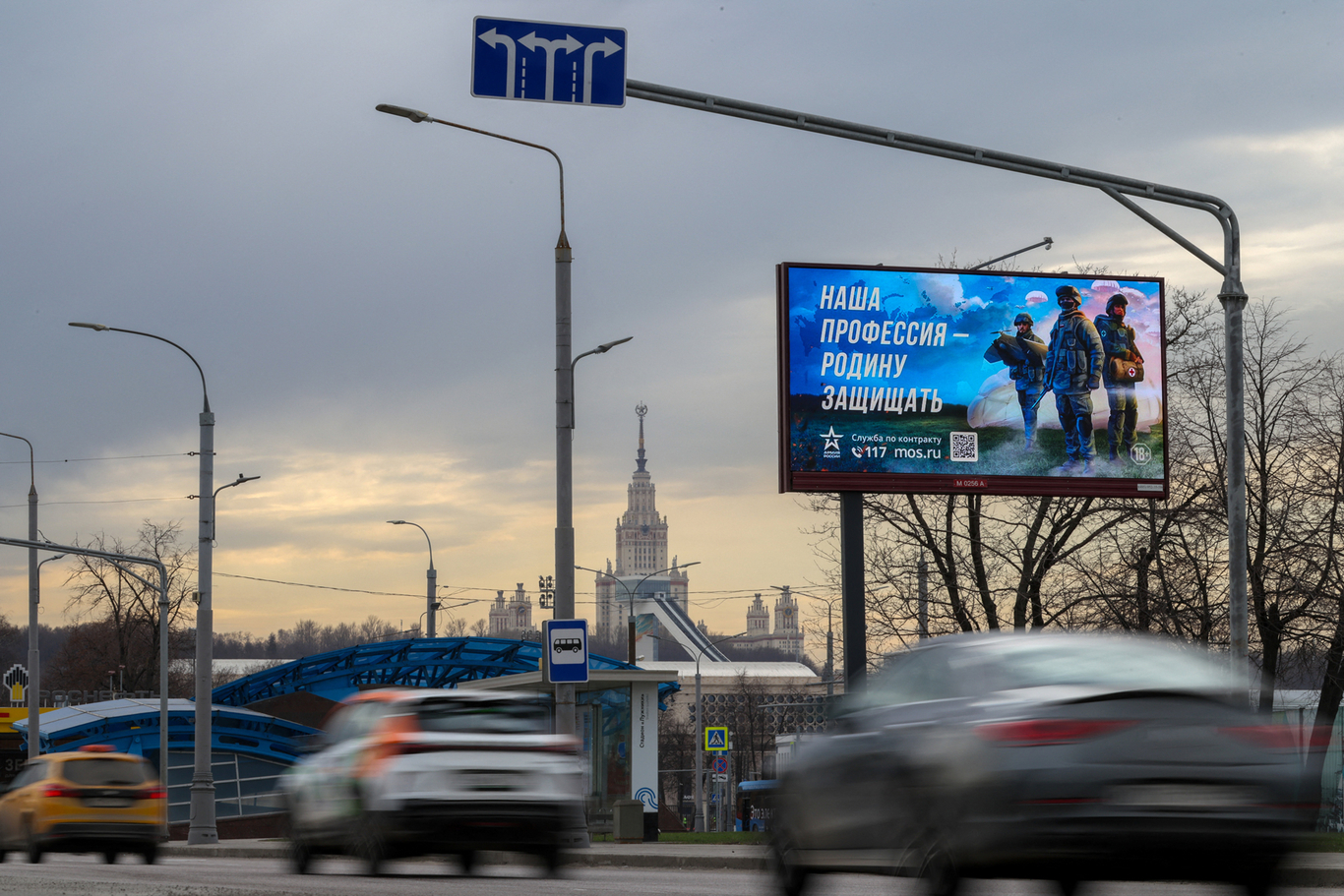
An advertisement for contract service in the Russian military, Moscow. Photo: Ramil Sitdikov / Reuters / Scanpix / LETA
Anton
I started thinking about leaving Belgorod, and Russia in general, around 7:00 a.m. on 24 February 2022, or maybe a little earlier. When you live in a border area, and a war starts, it can really impact you. You’ll die, or, at best, be wounded. Your property will be damaged. Going somewhere quieter seemed like the most logical thing to do. But even then I still didn’t want to leave until the very end.
I used to write anti-war slogans on sticker sheets and go around the city at night to put them up. I tried to place them where they wouldn’t be caught on surveillance cameras. Sometimes I even had a friend keep watch nearby to make sure no one was walking down the street. If we spotted a passerby, we’d pack it in immediately.
But I only really started taking the first steps towards leaving in 2023 or 2024. Back then, the laws on ‘discrediting’ [the Russian military] were already in full force; people were being thrown in jail over the word ‘war,’ and I was afraid that I’d get caught too.
I considered Georgia, Kazakhstan, and Armenia. But in the end, my girlfriend and I settled on Europe; we wanted to apply for political asylum. I started saving money and gathering the documents. I think we had a 50/50 chance of getting approved. The biggest step we took towards leaving was getting married so we could apply to all the programmes together.
Neither my wife nor I wanted to leave the country. We constantly debated whether to go or stay. It was getting incredibly tedious. We weighed the pros and cons, spoke about living over there, how we’d have nothing, and whether we’d have to start everything from scratch. And then we decided: “Fuck it, we just need to tough it out.”
[We keep] our visa documents ready: if things get much worse, we’ll need them. I still get my cat all the vaccinations required by the European Union. His veterinary passport is also filled out. That’s probably the last thing I still do, thinking we might need to get out of here.
We wouldn’t even be able to see each other abroad: my older relatives have never even left the Belgorod region, let alone gone to another country. I know I could leave and then stay out of opposition circles, not write anything on social media, and not talk about the war. Then I could live abroad and come home to see my relatives. But what’s the point of leaving, if you still have to stay silent?
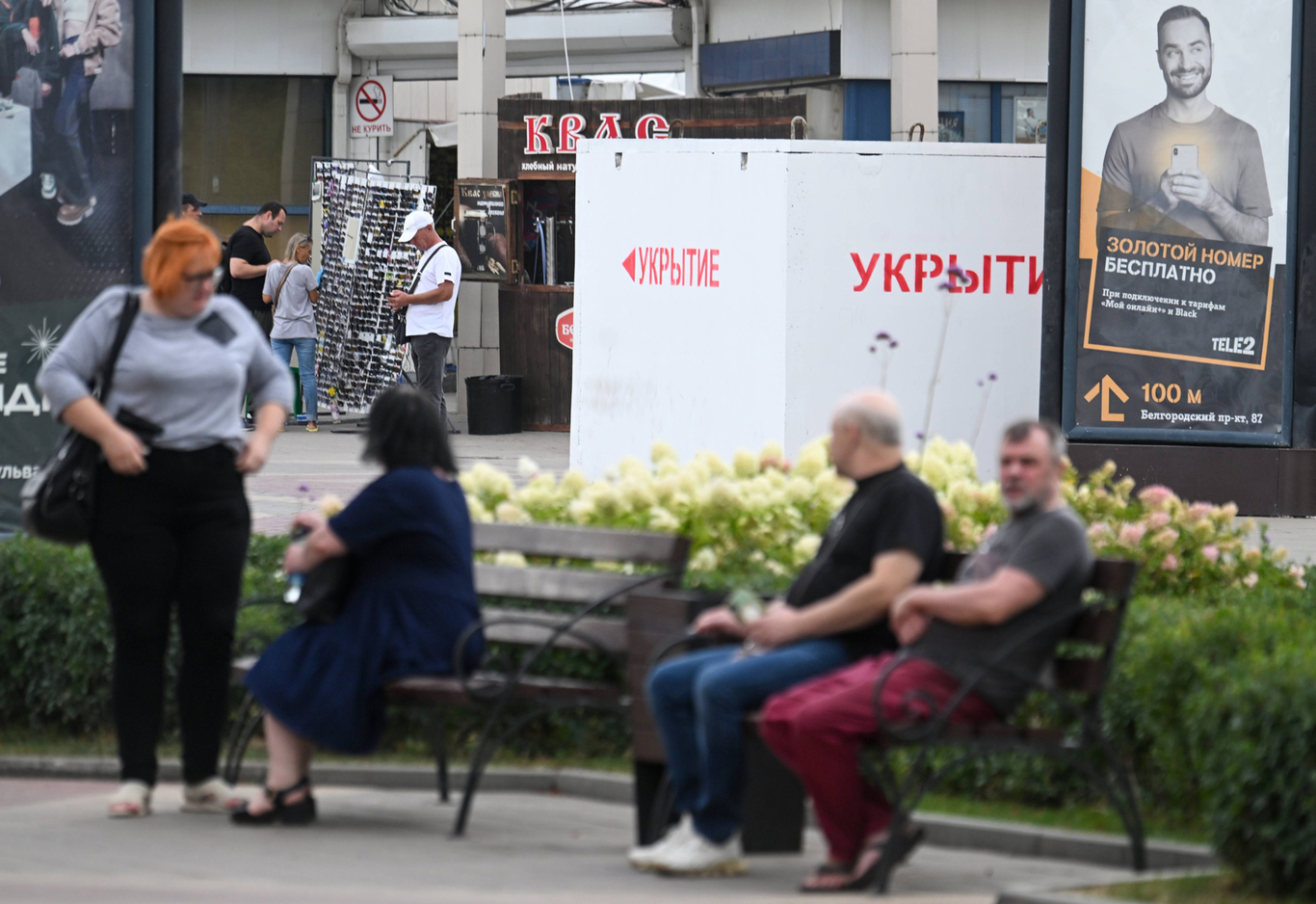
A bomb shelter in Belgorod, 15 August 2024. Photo: Mikhail Voskresensky / Sputnik / Imago Images / Scanpix / LETA
I’m very careful now about speaking out. Any activism is out of the question; it’s become too dangerous. Even the things you could do at the start of the war now seem too terrifying. I hope I’ve minimised my risks and I can stay here in peace.
There are also huge economic problems right now. The money you make is worth absolutely nothing, and prices keep rising. I can’t save for a mortgage down payment or buy a car, and that probably won’t change any time soon. I don’t even try to save. I’m tens of thousands deep in debt, and I take out new loans for the most absurd and unnecessary expenses. I just keep hoping that the economy crashes soon, the banks collapse, and I won’t have to pay back my debt.
Yekaterina
In 2020, I had a child. He was two when I noticed something was wrong. He didn’t make eye contact, respond to his name, or even show any signs of speaking. I took him to a short-stay group at a daycare, and they suggested transferring to a remedial preschool. I wasn’t against it; I could see the problems for myself. We started slowly going through tests.
Then the war started. I was working for an international company that offered us relocation. I remember my husband saying, “You’ve lost your mind? Where would we go?”
And yet, we moved in that direction. By early March, we had visas, and there were still some international flights out of Moscow. But right around that time, our child had his final appointment. After the examination, the psychiatrist said, “Of course, I could write down that he has autism, but if you don’t need me to, I won’t.”
I said there was no need. I was stupid.
After the diagnosis became more or less clear, I began looking into how autism therapy works in Russia and in the countries where my company was relocating employees. That’s how I learned about ABA [Applied Behavioural Analysis] therapy and how much it costs. My hair almost turned grey, and I realised that we simply wouldn’t be able to afford it on our salaries abroad. Moreover, in some countries, ABA therapy is practically unavailable. In Russia, we also have our home and the support of his grandmothers. I’d lose that if we emigrated.
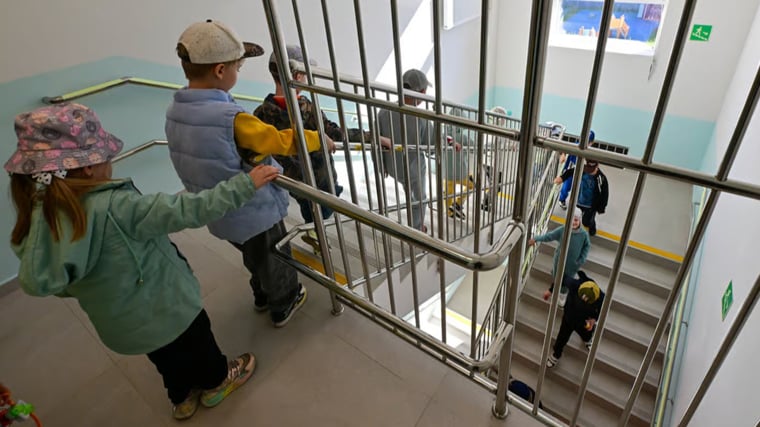
I had to change jobs, of course. My husband mainly supports us now. But my child gets the highest quality, most modern care. And then we have [Moscow Mayor Sergey] “Sobyanin’s splendour” — my child goes to a municipal preschool for children with special needs, where he gets the royal treatment. We don’t pay a dime for it, aside from the occasional thank-you to the teachers. Later on, he’ll go to a very good remedial school.
We’re entitled to a disability pension of around 30,000 rubles, and we get 80,000 rubles a year for a sanatorium trip. We can also go to a bunch of museums and play centres for free. We get free transportation and parking. In other words, our daily life is incomparable to what I would have had in Europe.
Naturally, I’m also concerned about big political issues. Like all sane Russians, I’m beating myself up — and I’m worried about the inability to express my opinion and so on. In another life, I probably would’ve been a hero on the barricades. But in this life, I’m far more worried about the fate of my child.
Vladislav
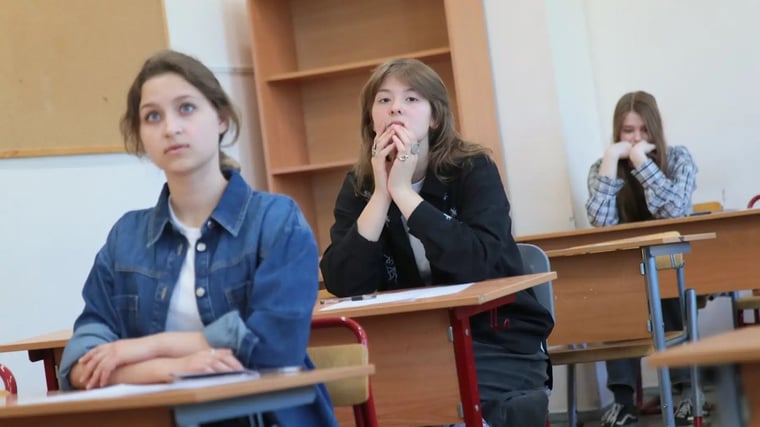
I come from a border region. When the war started in 2022, I had just graduated high school, and the most obvious option for moving was to study abroad. But I had no time to lose, because without going to university, I would certainly have been called up for military service. In the end, I went to study in Moscow.
On 21 September 2022, I was on my way to class when I saw the news that the mobilisation had begun. That’s when I started thinking a bit more seriously about leaving the country. Things calmed down a bit when the authorities officially granted students a deferment during the mobilisation. But rumours of another mobilisation began spreading immediately.
Around 10 January, I started packing to leave for Kazakhstan. I told my roommates in the dorm about my plans. They shared my fears but thought that they could wait it out in small Russian towns if anything happened. There’s a big difference between not-Moscow and Moscow, where surveillance cameras are everywhere.
But in the middle of the chaotic packing process, I decided that maybe such fateful decisions shouldn’t be taken emotionally. I had no plan; I thought I’d figure things out on the spot, in Kazakhstan. My savings were enough for two to three months, and then I’d need to find a job, which also seemed problematic — there are plenty of people like me there.
The new mobilisation never happened. Around 2025, I decided I wanted to finish my higher education abroad. In any case, I needed to keep studying after my bachelor’s degree to avoid military service. So I began choosing a master’s programme.
The specific academic discipline that interests me most is practically nonexistent in Russia. I began looking at other countries and found a university in Utrecht. I started learning Dutch. In Utrecht, you could study in English, but to live in the country, I still wanted to know the local language.
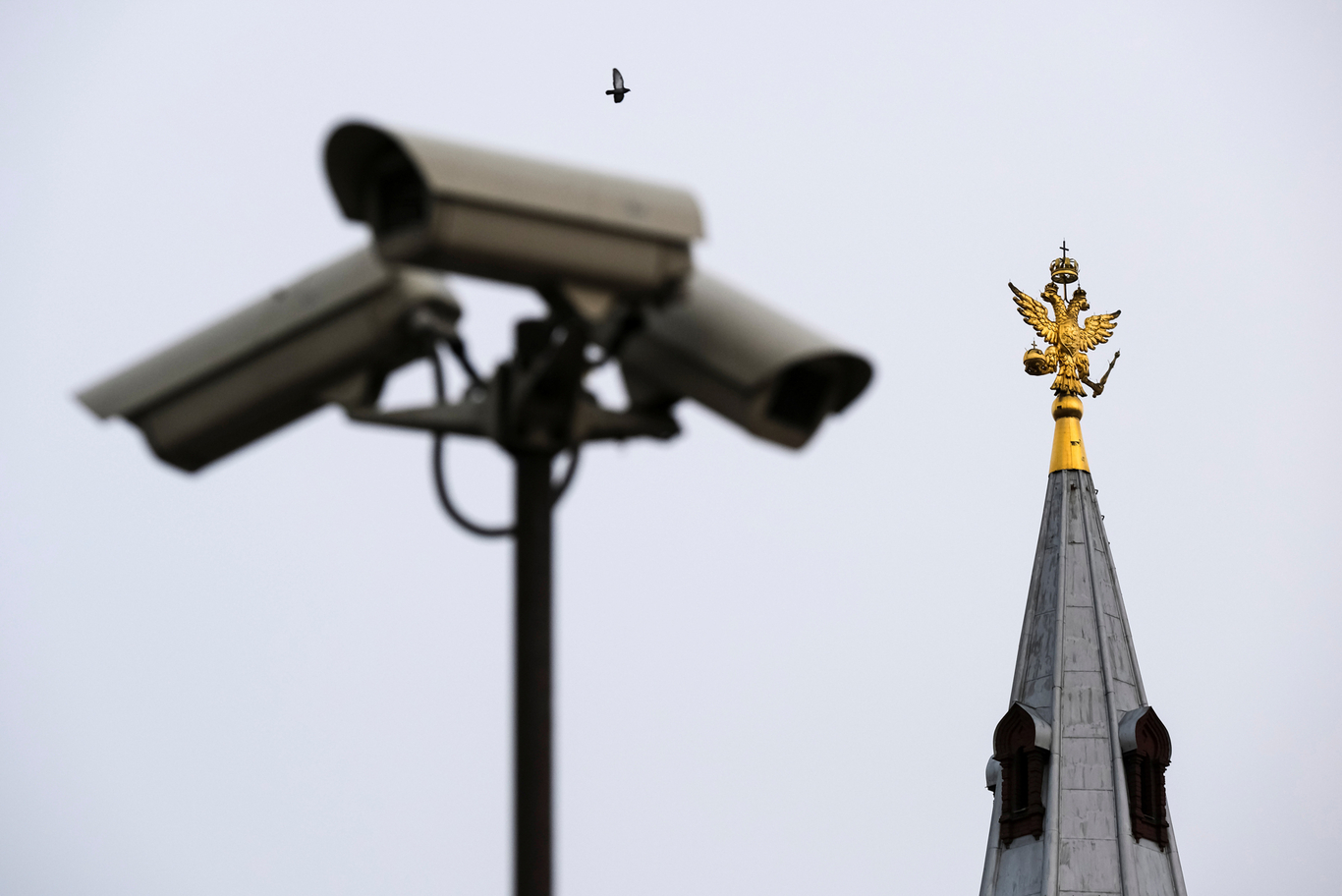
Surveillance cameras next to the Kremlin, 26 January 2020. Photo: Shamil Zhumatov / Reuters / Scanpix / LETA
I wasn’t really sure about my chances of getting a scholarship, and covering it all out of pocket was a problem. From the beginning, I knew there was really only one similar master’s programme in Moscow. I thought I’d use it as a backup if I couldn’t get into Utrecht. But at some point, it became my priority.
What scared me even more was that if I found a cool group in a new place, then I wouldn’t want to come back to Russia, even when the opportunity arises. I would likely be attached to the country I’m living in; I’d start a relationship there, or maybe even have children. At a certain point, I recognised that this outcome was more likely than it seemed at first glance.
I can’t take responsibility for myself in ten years. But I am responsible for myself now, for my values and priorities. And one of my main priorities is doing something for the good of my country. I identify with it. The prospect of falling in love with another country and stopping doing anything for Russia bothers me. I still don’t want to become a German, a Frenchman, an Englishman, a Finn, or anyone else.